
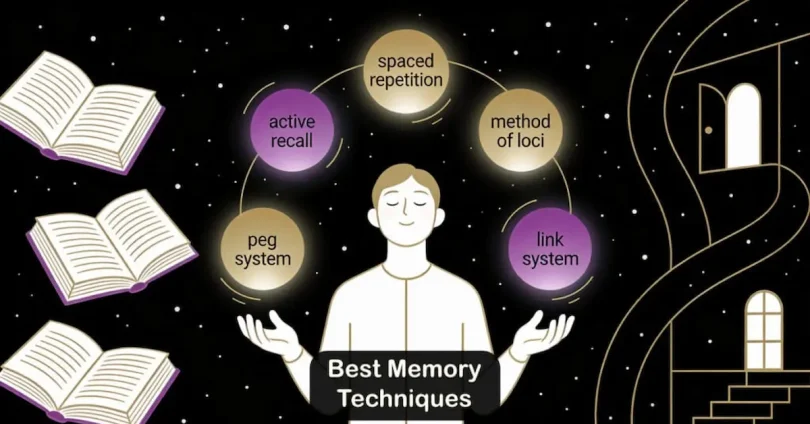

Memory is a key part of learning and plays a crucial role in our everyday life. Whether you are a student preparing for exams, a professional learning new skills, or someone trying to remember important information, having a strong memory can make a big difference. However, many people struggle with remembering what they study, often forgetting important details or finding it hard to recall information when they need it most. learning strategies for better memory
The good news is that memory can be improved using specific learning strategies. These strategies focus on techniques that help the brain retain information more effectively and make learning easier, faster, and more enjoyable. By applying methods such as active recall, visualization, spaced repetition, and mnemonics, learners can remember information longer, reduce study stress, and gain confidence in their learning abilities.
In this guide, we will explore the best learning strategies for better memory, explain why they work, and provide practical tips to help you apply them in your studies or daily life. Whether you are a beginner or looking to improve your memory skills, these strategies will help you learn smarter, retain more, and achieve better results.
Understanding Memory in Learning
To improve memory, it’s important to first understand how it works. Memory is the brain’s way of storing, organizing, and retrieving information. Learning effectively depends on both short-term memory and long-term memory, and knowing the difference can help you apply the right strategies.
Short-Term vs Long-Term Memory
- Short-term memory holds information temporarily, usually for a few seconds or minutes. For example, remembering a phone number long enough to dial it.
- Long-term memory stores information for days, months, or even a lifetime. For example, recalling facts you studied for a test or skills you’ve practiced over time.
How Memory Works in Learning
When you learn something new, your brain processes the information and connects it with what you already know. The stronger the connections, the easier it is to remember. Techniques like repetition, visualization, and active engagement help strengthen these connections and move information from short-term to long-term memory.
Common Memory Challenges
- Forgetting information shortly after learning it
- Difficulty recalling important details during exams or work
- Overload from trying to study too much at once
- Lack of focus or distractions during learning
By understanding how memory works, you can choose learning strategies that enhance retention, reduce forgetting, and make studying more efficient and effective.
you may also like to read these posts;
Mind Development Exercises: 10 Daily Habits to Boost Brain Power
Daily Mind Development Habits: Simple Steps to Boost Your Brain Every Day
Mind Development for Success: Boost Focus & Achieve Goals
Personal Mind Development Tips to Boost Focus & Clarity
Mind Development for Focus: Boost Attention Fast
Why Learning Strategies Improve Memory

Using the right learning strategies can significantly enhance your ability to remember and recall information. These strategies are designed to engage your brain actively, strengthen connections between ideas, and make studying more efficient. Instead of passively reading or memorizing, learning strategies help your brain process information in ways that improve long-term memory.
Active Engagement Strengthens Memory
When you actively participate in learning—through problem-solving, discussions, or teaching concepts to others—your brain creates stronger connections. Active engagement helps the information stick, making it easier to recall later. learning strategies for better memory
Organized Information is Easier to Remember
Learning strategies often involve organizing information into charts, lists, or mind maps. Structured information is easier for your brain to process and retrieve, reducing the chances of forgetting important details. learning strategies for better memory
Repetition Reinforces Recall
Repeating information through techniques like spaced repetition or frequent review strengthens memory pathways. Revisiting material multiple times over a period of days or weeks helps move information from short-term to long-term memory.
Personalized Strategies Match Your Learning Style
Everyone learns differently. Some people remember better through visuals, others through listening, writing, or hands-on practice. Modern learning strategies allow you to tailor your approach to what works best for you, improving retention and understanding. learning strategies for better memory
Reduces Study Stress and Improves Confidence
When you use effective strategies, you feel more organized and prepared. This reduces anxiety about forgetting information and builds confidence, which in turn helps your brain retain knowledge more effectively.
By applying these strategies consistently, learners can remember more, understand better, and make the learning process easier and more enjoyable.
Top Learning Strategies for Better Memory
Improving memory isn’t just about studying harder—it’s about studying smarter. The following strategies are proven to help learners remember information more effectively and retain it longer. learning strategies for better memory
1. Visualization Techniques
Visualization involves creating mental images to represent the information you want to remember. This can include diagrams, charts, or even picturing concepts in your mind.
- Example: Drawing a mind map to connect ideas in a chapter.
- Benefit: Helps your brain store information visually, making recall easier. learning strategies for better memory
2. Spaced Repetition
Spaced repetition is a method where you review information multiple times at increasing intervals. This prevents forgetting and strengthens long-term memory.
- Example: Reviewing flashcards over several days instead of cramming.
- Benefit: Moves information from short-term to long-term memory efficiently.
3. Active Recall
Active recall is the process of testing yourself on the material instead of just rereading it. It forces your brain to retrieve information, which strengthens memory.
- Example: Cover your notes and try to explain key points aloud.
- Benefit: Improves retention and prepares you for exams or real-life applications. learning strategies for better memory
4. Chunking
Chunking involves breaking information into smaller, more manageable parts. This technique makes complex information easier to remember.
- Example: Memorizing a long number by grouping digits together.
- Benefit: Reduces mental overload and makes learning more organized. learning strategies for better memory
5. Mnemonics
Mnemonics are memory aids like acronyms, rhymes, or associations that help you remember information more easily.
- Example: Using “PEMDAS” to remember the order of operations in math.
- Benefit: Makes memorization faster and more fun.
6. Storytelling or Association
Linking new information to a story or something familiar helps your brain make strong connections.
- Example: Remembering historical events by turning them into a narrative.
- Benefit: Creates a mental context that makes recall easier. learning strategies for better memory
7. Digital Learning Tools
Using apps, online quizzes, and interactive platforms can make learning more engaging and help reinforce memory.
- Example: Quizlet or Anki flashcards, educational videos, or brain training apps.
- Benefit: Provides interactive practice and tracks your progress for consistent improvement.
By combining these strategies, learners can create a personalized learning approach that strengthens memory, improves understanding, and makes studying more effective and enjoyable. learning strategies for better memory
Tips to Strengthen Memory While Learning
Improving memory isn’t just about using strategies—it’s also about adopting the right habits while studying. Here are some practical tips to help you retain information better and make your learning more effective.
1. Study Consistently
- Avoid cramming all your studying into one session.
- Short, regular study sessions help your brain process and store information in long-term memory.
2. Focus on One Task at a Time
- Multitasking reduces attention and weakens memory retention. learning strategies for better memory
- Concentrate fully on one topic or task before moving to the next.
3. Take Regular Breaks
- Study in focused intervals, such as 25–50 minutes, and take 5–10 minute breaks.
- Breaks help your brain recharge and improve information retention.
4. Get Enough Sleep
- Sleep is critical for memory consolidation.
- Aim for 7–9 hours of sleep per night to allow your brain to process and store new information.
5. Stay Hydrated and Eat Well
- Dehydration and poor nutrition can affect concentration and memory.
- Drink water regularly and eat brain-healthy foods like nuts, fruits, and vegetables. learning strategies for better memory
6. Use Multiple Strategies Together
- Combining techniques like visualization, active recall, and spaced repetition can improve memory more than using one strategy alone.
7. Reduce Distractions
- Study in a quiet, organized environment.
- Turn off notifications and limit social media to help your brain focus fully.
By following these tips along with memory-focused learning strategies, you can study more effectively, remember information longer, and build habits that support lifelong learning. learning strategies for better memory
Common Mistakes That Hurt Memory

Even with the best strategies, certain habits can make it harder to remember information. Being aware of these mistakes can help you avoid them and improve your learning outcomes. learning strategies for better memory
1. Cramming All Information at Once
- Trying to learn too much in a short period overwhelms your brain.
- Cramming may help you remember for a few hours but hurts long-term retention.
2. Relying Only on Passive Reading
- Simply reading notes or textbooks without engagement is ineffective. learning strategies for better memory
- Active techniques like summarizing, testing yourself, or teaching others strengthen memory.
3. Ignoring Review and Practice
- Not revisiting material leads to forgetting.
- Regular review sessions, like spaced repetition, are crucial for long-term retention.
4. Multitasking While Studying
- Checking your phone, browsing the web, or switching between tasks reduces focus.
- Distractions prevent your brain from forming strong memory connections. learning strategies for better memory
5. Studying Without a Plan
- Random studying wastes time and reduces effectiveness.
- Organize your study sessions with clear goals and priorities for better memory retention.
6. Neglecting Sleep and Health
- Lack of sleep, poor diet, or dehydration negatively affects memory and focus.
- Healthy habits are essential for your brain to process and store information efficiently.
Avoiding these mistakes, combined with effective learning strategies, can help you maximize memory retention, improve understanding, and achieve better learning results. learning strategies for better memory
What are the best learning strategies for better memory?
The most effective strategies include active recall, visualization, spaced repetition, mnemonics, chunking, and digital tools. Combining multiple techniques usually gives the best results.
How can I remember information more effectively?
Actively engage with the material instead of just reading
Use repetition and regular review
Break information into smaller chunks
Use visual aids, associations, or mnemonics
How often should I review material to retain it?
Using spaced repetition, review material shortly after learning it, then after a day, a week, and a month. This method strengthens long-term memory.
Conclusion
Improving memory is essential for effective learning, academic success, and daily life. By using memory-focused learning strategies such as active recall, spaced repetition, visualization, mnemonics, and chunking, learners can retain information longer, recall it more easily, and study more efficiently.
Combining these strategies with healthy study habits—like regular practice, focused sessions, proper sleep, and minimal distractions—enhances the learning process even further. Modern learning methods allow learners to adapt to their own style, making studying more personalized, engaging, and effective.
Ultimately, the key to better memory is not just working harder, but learning smarter. By applying these techniques consistently, anyone can strengthen their memory, boost confidence, and achieve better results in school, work, or personal learning goals.


